
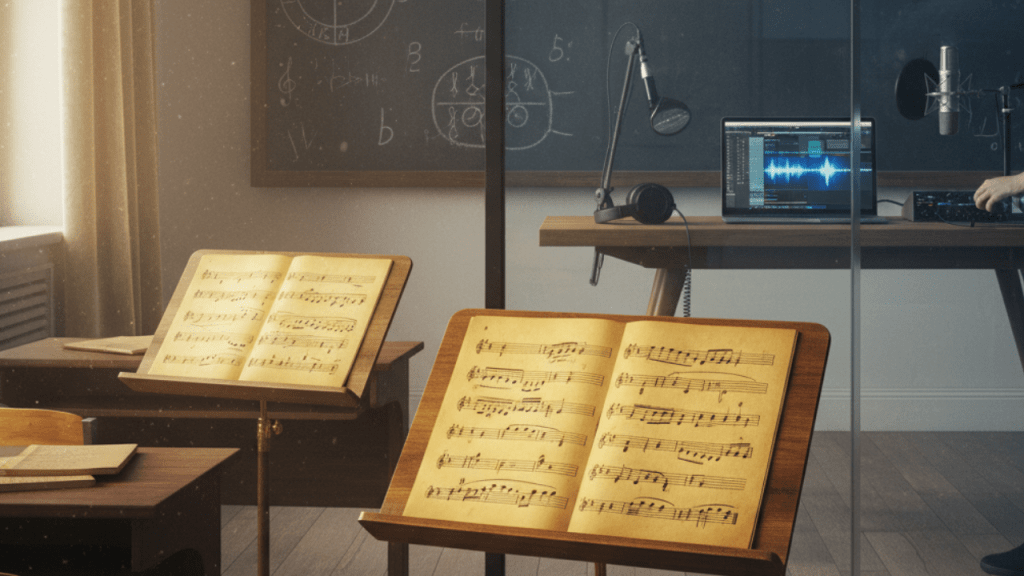
The Curriculum Is Already Outdated
Music schools teach technique.
Pitch. Timing. Tone. Theory. Performance.
All of that still matters. But there is a growing gap between what students learn in classrooms and what actually happens in modern production rooms.
AI vocals are already part of professional workflows. They are used in demos, writing sessions, remote collaborations, and tight deadline projects. Yet most music programs barely mention them. When they do, it is usually framed as something to avoid, fear, or dismiss entirely.
That silence is not accidental.
It is uncertainty.
Fear Is Easier Than Context
Many schools treat AI vocals as a threat to musicianship. As if using new tools automatically means cutting corners or lowering standards.
What rarely gets explained is this.
AI is not one thing.
There is a big difference between synthetic voices built from scraped data and ethical AI vocals created from real singers who choose to participate. There is a difference between replacing a performer and extending what a performer can do.
Without that context, students leave with fear instead of understanding. They are told what not to touch, but not shown how professionals are actually working today.
The Industry Moved On Without the Classroom
Outside of academia, producers are solving real problems.
They need vocals at odd hours. They need fast demos that still feel human. They need to collaborate across cities and time zones. They need to move ideas forward without waiting weeks for logistics to line up.
AI vocals became part of that solution not because they are easy, but because they remove friction. When used correctly, they do not replace singers. They make collaboration possible when it otherwise would not be.
Music schools rarely talk about this reality.
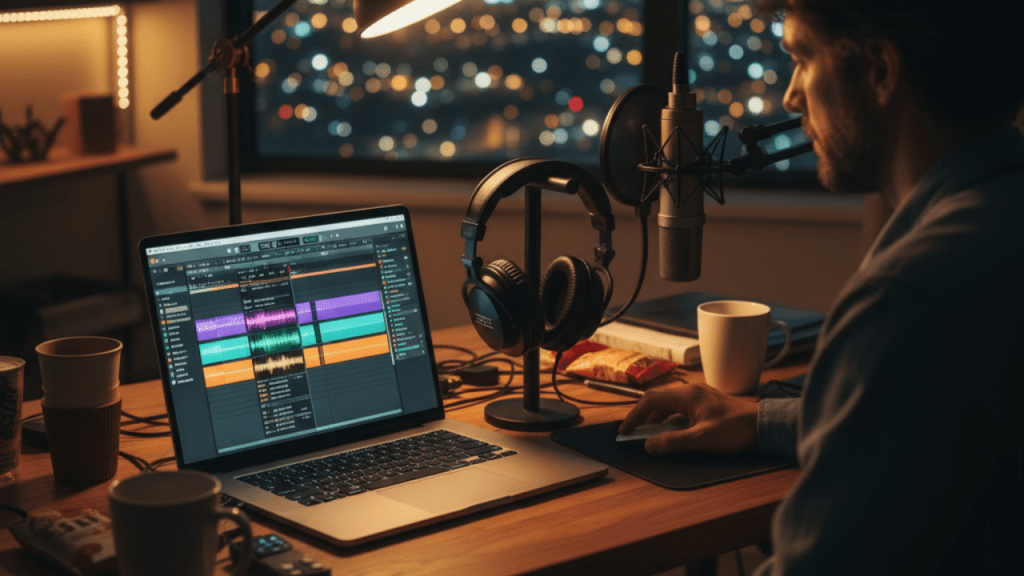
Technique Alone Is No Longer Enough
A great voice still matters.
Training still matters.
Discipline still matters.
But so does understanding the tools shaping modern production.
Knowing how to work with ethical AI vocals is not cheating. It is literacy. Just like learning how to comp, tune, edit, or mix vocals. Tools evolve. The craft adapts.
Students who are never taught this leave school unprepared. Not because they lack talent, but because they lack context.
The Conversation Nobody Wants to Have
Here is the part that often gets skipped.
Not all AI vocals are ethical. Many tools use voices without consent. Many models are trained without compensation. Many systems profit while the original artists disappear from the picture.
Avoiding the conversation does not protect students. It leaves them unaware.
Education should teach discernment. How to ask where a voice comes from. Who gets paid. Who gave permission. And why that matters.
Ignoring AI does not make it go away. It only removes the guardrails.
What Ethical AI Vocals Actually Teach
When built responsibly, AI vocals reinforce the value of real singers.
They remind producers that every voice has a source. That performance matters. That tone and emotion come from years of work. Ethical systems make that visible instead of hiding it.
They also teach collaboration. A demo is no longer a dead end. A writing session no longer stops because a vocalist is unavailable. Ideas move forward without erasing the human behind the sound.
That is not a shortcut.
That is evolution.
What We Believe at Auribus
At Auribus, every voice begins with a real singer.
Artists opt in. Artists are compensated fairly. And artists remain part of the creative loop every time their voice is used.
Our technology exists to support musicians, not bypass them. To help producers move faster without sacrificing sound or ethics. To make modern workflows more human, not less.
Music education should prepare students for the world they are entering. Not the one that already passed.
The Real Lesson
AI vocals are not the enemy of music education.
Silence is.
The future belongs to creators who understand both craft and context. Who respect tradition while using modern tools responsibly. Who know the difference between exploitation and innovation.
Music schools will catch up.
The industry already has.
The question is not whether AI vocals belong in music.
It is whether we teach the next generation how to use them the right way.
 Auribus Blog